
Stormwater is water that runs off both natural land surfaces and man-made surfaces rather than soaking into the ground. It can come from rainfall, or melting snow and ice. Most stormwater enters streams, but some can
evaporate or infiltrate into the ground.
Stormwater Frequently Asked Questions (FAQs)
Stormwater affects our roads, properties and streams. These frequently asked questions explain where runoff goes, why water quality matters and simple steps residents can take to protect East Cocalico Township waterways.
Remember: Storm drains are for stormwater only. Never dump paint, oil, chemicals, grass clippings or other waste into a drain.
Download a Handout Version of Stormwater FAQs
Stormwater Basics
The simple answer is that water flows downhill. In East Cocalico Township there are two main drainage areas, Cocalico Creek and Muddy Creek. Both of those streams flow into the Conestoga River, which flows into the Susquehanna River. The Susquehanna River forms a large part of the Chesapeake Bay Drainage Area.
Here is a map of the two main drainage areas in East Cocalico Township: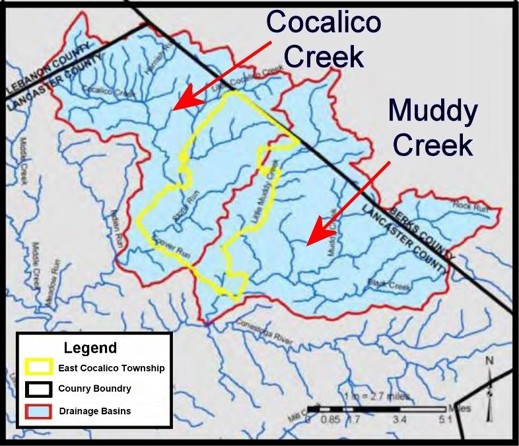
Why is stormwater an important issue?
With increasing development, there is more stormwater entering our streams, and also more pollution going into those streams. This pollution has had a large negative impact on the Chesapeake Bay. The Bay is in
danger of losing many economically important aquatic species (such as fish and crabs) and also recreational opportunities could be limited resulting in a decrease in tourism and the income associated with it.
Why do we need to keep stormwater clean?
The only practical way to clean up the Chesapeake Bay is to improve the quality of the water entering the Bay. To improve the water quality in our streams requires preventing pollutants from entering them. Improving the
quality of stormwater requires a variety of approaches, including engineered structures such as stormwater detention basins designed to treat water quality and reduce the rate of flow of water leaving the basins (faster flowing water washes more soil into streams from erosion). It also requires human behavior to change, such as using less fertilizer and pesticides on our lawns, and for farmers to use methods to reduce stream pollution from agriculture.
Pollution & Water Quality
What pollutants can be found in stormwater?
Almost any substance can get into streams. But in the case of the Chesapeake Bay, the pollutants of greatest concern include nitrogen and phosphorous (both act as a fertilizer resulting in excess algal growth, which in turn reduces the light levels reaching beneficial aquatic plants (which feed aquatic organisms and drives the entire food chain in the Bay) sediment, and bacteria. Sediment is fine soil particles suspended in the water which tends to give it a brown color similar to chocolate milk. It also blocks light from reaching plants, and also interferes with breathing through gills in crabs, fish and many other important species in the Bay. Bacteria can make the water dangerous for recreational use.
How do pollutants enter stormwater?
As water runs over land surfaces it picks up fine particles of soil (sediment), bacteria, and dissolves chemicals and nutrients (such as nitrogen and phosphorous) from various sources such as animal waste, and excess fertilizer applied to lawns and farms. Those pollutants contaminate the streams, degrading their water quality
How can stormwater quality be improved?
The first step to reduce the amount of pollutants in stormwater is to decrease the rate of flow from a property. Faster moving water has more force to erode soils and other pollutants. Also, how fast water is moving determines how much sediment the water will carry. Slowing the water’s flow rate will cause sediment to settle out of the water. A storm water detention basin catches stormwater and releases it slowly. This reduces the erosion caused in streams, and also allows part of the sediment to settle out in the basin rather than be carried into a stream. In areas with a lot of sediment in the stormwater may require basins to be cleaned out more frequently.
Other strategies for improving stormwater quality is to reduce the amount of runoff. Use of less area of impervious surfaces (paving, rooftops, etc.) will allow more of the water to soak into the ground. Use of “pervious” paving which allows water to pass through it into the ground can also help. Narrower streets can also reduce impervious surface area. These strategies are all part of the design process for new construction.
On existing development, removal of unnecessary impervious surfaces can help. Unnecessary paving or structures can be removed to decrease runoff. Planting of vegetation will also decrease runoff and slow the remaining runoff. This also improves stormwater quality.
Who is responsible for protecting stormwater?
Property owners, businesses and municipalities all have roles. East Cocalico Township manages municipal stormwater responsibilities and administers local requirements; residents can help by preventing pollution on their properties.
Development & Erosion
Erosion is when fast moving water picks up soil and other particles and carries them away. Erosion removes soil from stream banks in areas where the water is fast moving. This damages the stream banks, and can cause trees to topple into the streams, and endanger structures near the stream such as bridges. It also adds sediment to the water that will be deposited somewhere downstream.
How does land development affect stormwater?
When land is changed from natural vegetation (where much of the stormwater can soak into the ground) to rooftops, roads, driveways, sidewalks, and other man-made structures, much less water soaks into the ground and more of it runs off. Without stormwater management facilities (such as basins) the additional runoff would carry more pollution into the streams, and also the increased rate of flow in our streams results in more stream bank erosion and potentially increases flooding.
What is an impervious surface and how does it affect stormwater?
An impervious surface is an area, such as a roof, paved driveway or road, that prevents most rainwater from soaking into the soil. These surfaces increase runoff and can carry pollutants into streams.
Natural vegetated areas allow much of the rainwater to soak into the ground. When we add impervious surfaces (where water runs off instead of infiltrating into the ground) it increases the amount of water running off land surfaces. This washes more pollutants into the streams and causes more erosion of soil from the stream banks.
There are a variety of ways in which erosion can be reduced. Because fast flowing water moving over soil (especially disturbed soil) is what causes erosion, anything that reduces the flow of water or protects the soil for coming into contact with the moving water will limit erosion.
One way to reduce erosion on disturbed soil is to cover the soil with mulch. This will help unless there is sufficient flow to carry the mulch away, in which case the mulch could also become a pollutant. This method also helps in gardens landscaping on residential properties.
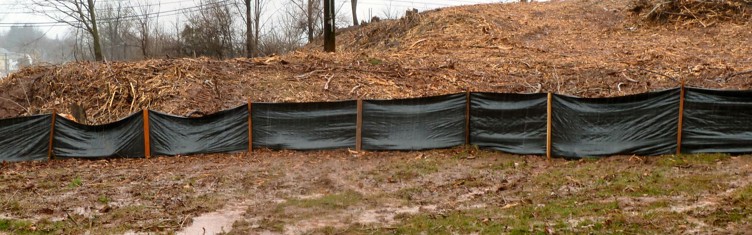
Installation of silt fencing is used on construction site with soil disturbance. It is made from a tough fabric that allows water to slowly pass through the fence. The lower edge of the fabric is buried in the ground. By slowing down the water and also filtering out the larger it does a good job of reducing the amount of sediment in the water.
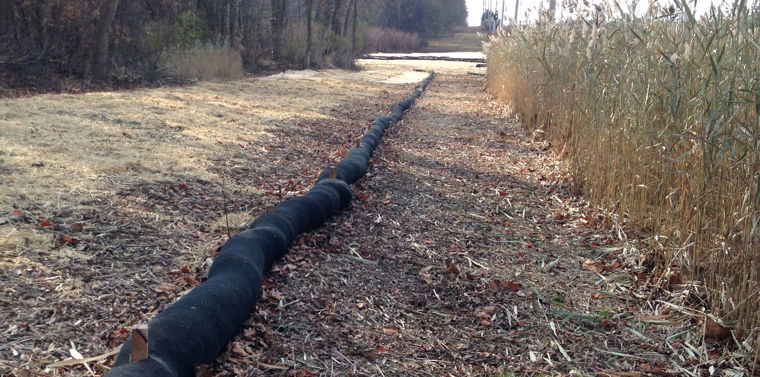
A newer technology for reducing sediment in runoff is a silt sock. It consists of a tube of biodegradable porous fabric that is filled with mulch or a similar material. It is staked down to the ground so that water can’t pass under it. It acts in a manner similar to a silt fence, but can be effective in filtering the runoff.
What Residents Can Do
How can I help keep stormwater clean?
Use fertilizer only as needed; consider a soil test. Keep grass clippings, leaves and debris off streets and out of storm drains. Wash vehicles at a commercial car wash when possible, or where wash water can soak into a vegetated area. Stabilize exposed soil after landscaping, pick up pet waste and never dump anything into a storm drain.
Is improving stormwater quality expensive?
Some engineered stormwater improvements can be costly. Many everyday pollution-prevention measures, however, are inexpensive or free. Preventing pollution at its source is often the simplest place to start.
An illicit discharge is a release of pollutants into a storm drain, stream or other waterway that is not allowed. Examples may include dumping paint, oil or chemicals. In Pennsylvania, this is illegal and can result in very significant fines, especially if a fish-kill results from the discharge. Never place anything other than stormwater into a storm drain.
Report suspected discharges promptly using the appropriate agency contact information.
- Contact your local township office, 717-336-1720, to report dry-weather flows, dumping into storm drains, or suspicious discharges from pipes.
- Examples of reportable local issues include sewage/septic leaks, wash water, oil, gasoline, paint, and chemical dumping.
- Active hazardous material or petroleum spills (emergencies): Call 911 or the PA DEP Emergency Response Hotline immediately 1-800-541-2050.
- Impacts directly to streams, rivers, or aquatic life: Contact the Pennsylvania Fish & Boat Commission at 1-855-347-4545.
Report an Illicit Discharge
Use this form to report suspected illegal dumping, unauthorized discharges, or pollutants entering storm drains, waterways, or the Township's stormwater system.
